
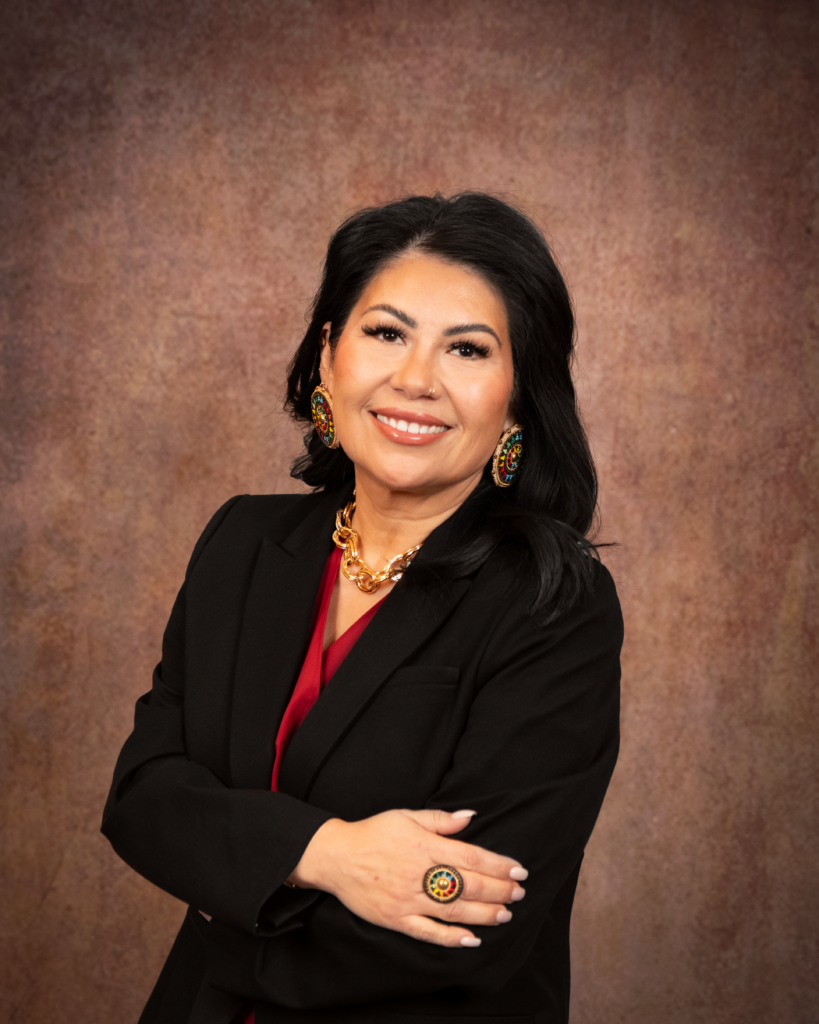
Day 2 – Breakout Session 8 – 2:15-2:45 PM
Room: Wildfire
Growth Is Not the Goal. Sustainable Growth Is.
Colista Matsaw · RizeCon 2026 · Pocatello
Colista Matsaw started at the Shoshone-Bannock Casino Hotel in 1999 as a security dispatcher making six dollars an hour. She worked her way up through nearly every department, served as interim CEO during COVID, was passed over for the permanent position, returned as hotel executive director, and was terminated six months later by the person who replaced her. After three years away doing nonprofit work, she was asked to come back. She accepted — because the business belongs to every enrolled member of her tribe, and she believed she could make it better for all of them.
She is now the CEO, two years into a second chapter. The property has 480-plus employees, a 36-year operating history, seven tribal council members she reports to, two regulatory audits a year, and a set of constraints most business operators never face. What she brought to RizeCon was the framework she’s been applying: not how to grow fast, but how to build something that holds when growth arrives.
What she covered
Sustainable growth exposes everything. Colista opened with a warning she’s lived through personally: growth feels exciting, but it reveals every weakness you’ve been tolerating. Weak processes collapse under volume. Culture gets tested when pace increases. Leadership gets stretched thin covering gaps. Short-term wins, chased without infrastructure behind them, quietly build long-term risk. She named the four failure modes she sees most often — chasing revenue without infrastructure, hiring fast without leadership development, adding complexity without policies and procedures, and making decisions based on pressure rather than strategy.
Build the operations foundation first. Before scale, you need clear processes, defined accountability, financial discipline, and daily visibility into performance. At the casino, every gaming machine feeds into an online accounting system. She employs two data analysts. The executive team holds regular financial and capital asset meetings. The result: expenses and revenues have improved significantly since she implemented this structure. Her line on what this visibility enables: if you can’t see your business clearly, you can’t scale it responsibly.
Break the silos. The casino operated in silos for years — departments not talking to each other, no cross-functional communication, no shared view of what was working or what was slow. Colista changed that. Now when Tuesdays come in soft, the whole leadership team is in the same room asking what they’re going to do about it, whether the idea worked, and what to try next. She said she will never say no to an idea without trying it first. That kind of cross-departmental problem-solving requires everyone knowing what everyone else is doing.
Develop leaders, plan for succession. The organization should not depend on any one person — including the CEO. Colista knows this from experience. When she left the interim CEO role and the transition went poorly, part of what failed was that the plan lived in her head and hadn’t been built into the people around her. She has spent the last two years correcting that: having regular conversations with multiple people on her team about what the next projects are, what the long-term goals look like, and who is being developed to carry those forward. Her reasoning was direct — she wants to leave on her own terms someday, and she wants to leave something intact behind her.
Culture holds the line when growth gets messy. Culture, as she defined it, is what people do when leadership isn’t in the room. The Shoshone-Bannock Casino Hotel’s customer service program is called Legendary Service — a commitment the leadership team created a decade ago, and which Colista reinvested in when she returned. Her HR director has been leading a broader culture shift: working with long-tenured staff who are used to one way of operating and helping them see the work as a career, not just a job. That shift is ongoing and not finished.
Not all opportunities are worth the cost. When labor and cash flow don’t align, some growth shouldn’t happen yet. The tribe operated for decades without debt, in what some might call a modest building, because the priority was employing tribal members and distributing profits — not building the biggest casino on the floor plan. The decision to take on their first loan was a significant cultural moment. Colista isn’t dismissive of ambition — the tribe has 157 acres near Mountain Home that’s been in development planning for seven years — but she is disciplined about sequencing. Structure before scale.
Growth with control. Her definition of control is not surveillance — it’s systems, policies, procedures, and regular communication about what’s actually happening in the business. She cited the pattern that most people have seen: a business that looked very successful and then disappeared. In nearly every case, they weren’t prepared for their own success. Scaling requires systems, leadership layers, and clear communication structures built before you need them.
What attendees got
Colista closed with four questions she asked every person in the room to sit with:
What are you building that will still hold five to ten years from now? What are you tolerating today that will break you later? Where in your organization are you moving too fast without structure? And what decisions are you avoiding because they’re uncomfortable but necessary?
She didn’t offer easy answers to any of them. The point was that the questions are the work.
One story that landed
She was interim CEO during COVID, did the job, and wasn’t selected when the permanent role was posted. She returned to the hotel director position and was terminated six months later by her replacement. She said, simply, that she didn’t want to get into it too deeply because she might cry. Then she kept going. She spent three years in nonprofit work, was asked to return and apply for the CEO position, and described the decision as genuinely hard — she knew the casino world and the nonprofit world, and knew the difference in what each one asks of you. What brought her back was the math of the mission: every dollar made belongs to every enrolled tribal member. She had the ability to make a difference for her people, her family, her kids, her relatives. That weighed heavily enough that she came back.
“Growth in my world isn’t just about profit — it’s about responsibility. And that responsibility is to every single one of our enrolled tribal members.” — Colista Matsaw
“If you can’t see your business clearly, you can’t scale it responsibly.” — Colista Matsaw
About the speaker
Colista Matsaw is the CEO of Shoshone-Bannock Casino Hotel in Fort Hall, Idaho. A Shoshone-Bannock tribal member, she started at the property in 1999 as a security dispatcher and spent over two decades progressing through its departments. She holds a bachelor’s degree in hospitality and casino management and a master’s degree, both from National University. She returned as CEO two years ago after a three-year period working in nonprofit and tribal government roles, including with the National Native CDFI network. She reports to a seven-member tribal council and oversees a 480-plus person operation.