
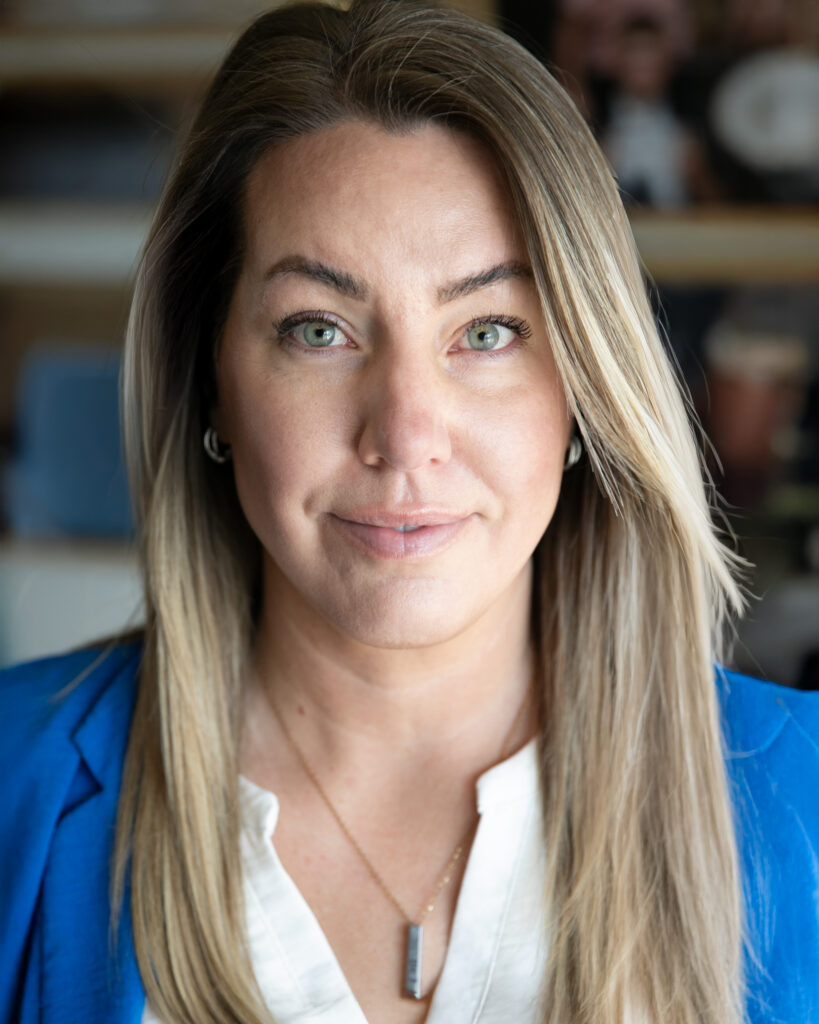
Day 1 – Morning Keynote – 9:45-10:15 AM
Room: Affectiv
AI Won’t Build Better Leaders. But It Might Give You the Time To.
Rebecca Mumma · RizeCon 2026 · Pocatello
Rebecca Mumma is building two things at once: Effective, a software platform to untangle the operational chaos facing providers who serve people with disabilities, and a leadership culture framework she’s been carrying in her Notes app for three years, 75% finished, that she hasn’t had time to complete. Her RizeCon talk was the first time she laid both of them on a stage together — and the story of why one exists to give the other room to breathe.
She grew up learning to read a room before she could read a book. Her thesis on leadership didn’t come from business school. It came from watching what chaos does to human beings when nobody in the room is stable enough to stop spreading it.
What she covered
Every room has a tone. Someone sets it. Rebecca’s core observation, learned early: every room has a tone. Somebody sets it, somebody spreads it, somebody absorbs it, and somebody always lies about it. When nobody tells the truth, people start adjusting themselves to the dysfunction like it’s furniture. She learned that before kindergarten. The children who grow up in those environments become excellent readers of a room — skilled at anticipating crisis, de-escalating conflict, carrying emotional weight — and the world will reward those skills for a long time before it exposes them. She called the result “trauma with a blazer on.”
The difference between calming chaos and being shaped by it. Rebecca draws a line between two things that look identical from the outside. One is actual leadership: staying grounded, telling the truth, not escalating, not making everyone else carry your chaos. The other is performance: looking steady, sounding mature, reading what people need and handing it back to them in a polished package that nobody asks too many questions about. For years, she was only doing the second one. The problem is that childhood teaches you to perform stability, and adulthood rewards you for it before it exposes you for it. Functioning and being genuinely regulated are not the same thing.
Performed leadership versus actual regulation. The framework Rebecca is building — the one in the Notes app — is an adaptation of 12-step recovery principles applied to leadership and organizational culture. The premise: the same patterns that tear apart a family system also tear apart a team. When a leader is unpredictable, everyone else reorganizes around the instability. They become hypervigilant, overly responsible, performative, exhausted, emotionally scrambled. The antidote isn’t better performance. It’s actual regulation: telling the truth faster, repairing what you break, and becoming stable enough that other people don’t have to brace themselves when you walk into a room.
Recovery rooms taught her what business schools didn’t. It was in recovery that Rebecca learned that being not okay is not a moral failure, and that truth is not the enemy. She had spent years in environments — religious, professional, personal — that rewarded certainty over honesty. She learned to make things look okay rather than making them actually okay. The recovery rooms flipped that. Your life doesn’t get better when you get better at managing appearances. It gets better when you get more honest about reality. Hypervigilance is not peace. Over-functioning is not health. Emotional shape-shifting is not leadership.
Operational drag kills leadership capacity. The culture framework has been 75% done for three years not because Rebecca doesn’t care about it — she described it as her calling — but because she’s been buried. Running a disability services business funded by Medicaid means living inside a patchwork of fragmented software systems that were never built for that field. She described it as being hunted for sport by six different softwares and a compliance deadline. When systems meant to support people are so fragmented they drain people instead, leaders spend their best energy keeping the machine from breaking rather than investing it in the people in the machine. That’s the trap.
AI as a return to humanity, not a replacement for it. What excites Rebecca about AI is not that it can do the human work better — it can’t repair trust, can’t sit with grief. What it can do is remove the clutter. Vibe coding Effective alongside an actual developer has been, for the first time, buildable: she can describe what she needs in plain language and watch it come to life. Not shopping for software that almost fits, but building capabilities that actually reflect the reality of her field. The freedom she’s after isn’t speed. It’s the freedom to stop duct-taping systems together, stop spending leadership energy translating between broken tools, and get back to the work she actually cares about. AI, in her framing, is not less humanity — it’s a return to it.
The work she wants to do. Leaders who tell the truth faster. Leaders who know how to manage chaos and repair trust. Not just better systems — better humans inside the systems. That’s what the Notes app framework has always been about. For the first time in a long time, she can see a path to finishing it.
What attendees got
Rebecca’s company Effective is a software platform in development for disability services providers. The culture framework she described — an adaptation of 12-step principles applied to organizational leadership — is a work in progress she plans to complete now that operational drag is being reduced. She indicated it will address how leaders regulate themselves, repair trust, handle tension, tell the truth faster, and stop performing leadership while becoming someone stable enough to lead other humans well.
One story that landed
Rebecca showed three newspaper clippings from the Salt Lake Tribune. The first was a birth announcement: her brother was born on January 18th, 1989. The second was a report from January 22nd — her mother’s 20th birthday, her brother four days old — that her father had killed a man in a hit-and-run with the family’s blue Ford pickup. The truck was found in the hospital parking lot. The registered owner was inside having a baby. The third was the follow-up: no arrests yet, investigation continuing. He went to prison. More DUIs followed, more prison, more addiction. He died of an overdose before Rebecca’s first son was born. Her father never beat addiction. And what she took from all of it — not as a victim, but as someone who spent a lifetime studying what it does — is that she understood emotional climate before she had words for it. She understood that one unregulated person can destabilize an entire room. She understood that the opposite is also true.
“When childhood teaches you how to perform stability, adulthood will often reward you for it before it exposes you for it.” — Rebecca Mumma
“AI is not less humanity. It’s a return to it. I don’t want to use AI to avoid people or fire people. I want to use it to get back to them.” — Rebecca Mumma
About the speaker
Rebecca Mumma is the co-founder of Effective, a software platform being built to consolidate and streamline operations for disability services providers in the Medicaid-funded home and community-based services space. She is also developing a leadership culture framework adapted from 12-step recovery principles, focused on helping leaders regulate themselves, repair trust, and build environments where people feel safe. She runs her business with her family and brings a background in addiction recovery, nonprofit service work, and firsthand experience navigating the systems that serve vulnerable populations.